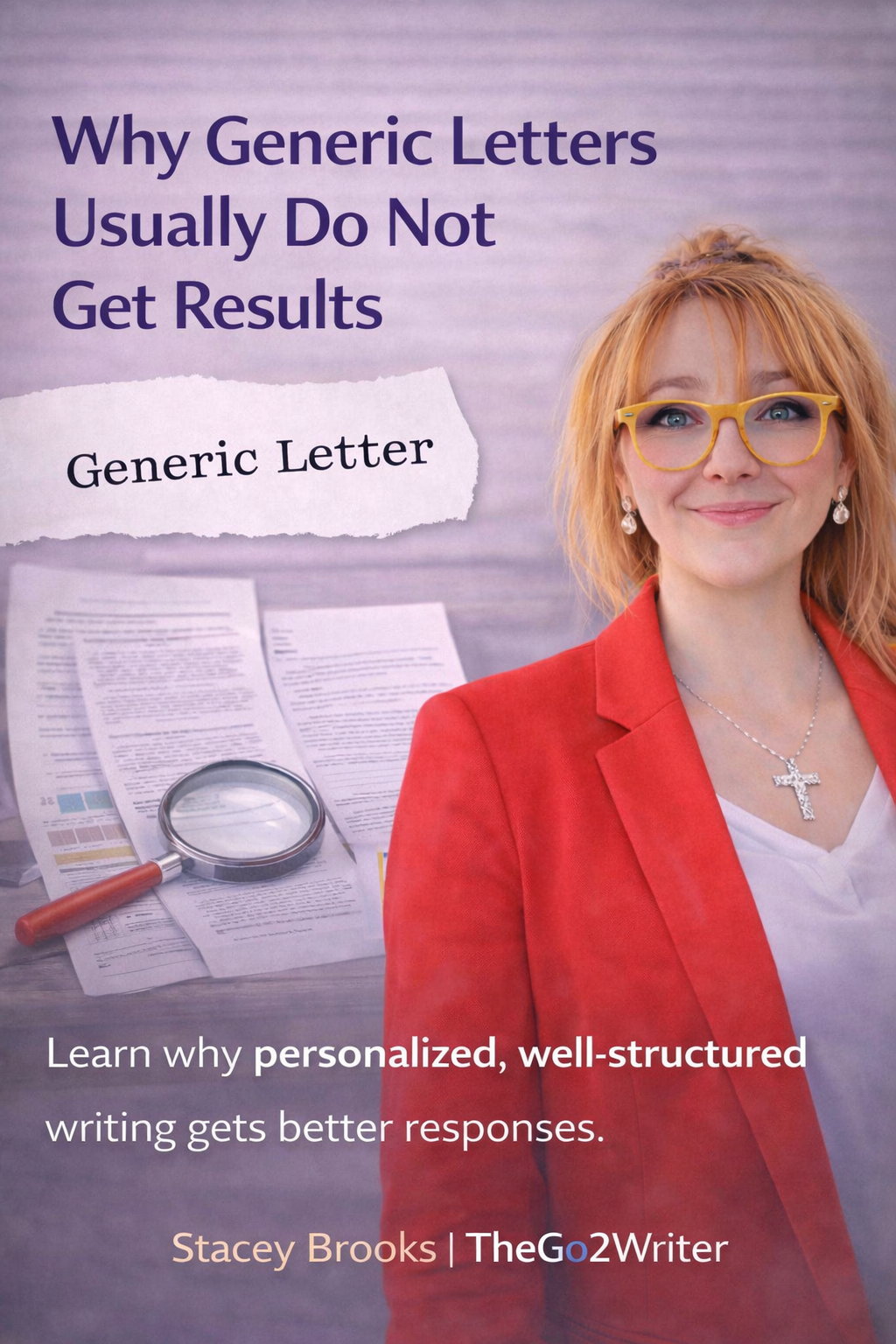
Why Generic Letters Usually Do Not Get Results

When people need to write something important, one of the first things they do is search online for a template.

A hardship letter.
A dispute letter.
An appeal.
A business request.
A complaint letter.

And while templates can sometimes be helpful as a starting point, they often create another problem.

They sound generic.

The wording may be technically correct, but it does not actually reflect the person, the situation, or the details that matter most.

This is one of the biggest reasons important letters often do not get the response people were hoping for.

Most readers can tell when they are looking at a copied template.

It feels vague.
It feels impersonal.
And sometimes it feels like the writer is trying to fit their situation into words that do not really match what happened.

Strong writing is not about using the fanciest language.

It is about making sure the document feels specific, clear, and believable.

A good letter explains the situation directly.
It includes the details that matter.
It keeps the focus on facts instead of emotions.
And it is written in a way that makes it easier for the reader to understand the request being made.

That does not mean every letter has to be long.

In fact, many of the strongest letters are relatively short.

The difference is that they are intentional.

Every sentence has a purpose.
Every detail supports the message.
Every paragraph moves the reader closer to understanding the situation.

Templates may save time.

But personalized writing usually gets better results.

Because when a document actually sounds like the person behind it, the message becomes much more powerful.

Whether it is a credit dispute, an unemployment appeal, a hardship letter, or a business request, the words matter.

But the structure matters too.

When both are working together, the document becomes much more effective.

Stacey Brooks | TheGo2Writer

When Words Matter Most: How to Write Clearly in High-Pressure Situations

There are moments when writing is not optional.

It is not creative.
It is not casual.
It is necessary.

A resignation letter.
An appeal.
A complaint.
A formal request.
A response to an accusation.
A message to a school, employer, agency, landlord, client.

And in those moments, emotions are high. Thoughts are scattered. Stakes feel heavy.

This is where most people struggle.

Not because they lack intelligence.
Not because they do not know what happened.
But because pressure disrupts clarity.

Today’s post is practical. If you ever have to write something important under stress, here is how to do it well.

1. Separate Emotion From Structure

Emotion belongs in your experience.
Structure belongs in your document.

Before you begin writing the actual message, do this:

On a blank page, answer these three questions only:

  1. What happened?

  2. What do I want?

  3. What outcome would be reasonable?

Keep it short. Bullet points are fine.

This step prevents emotional spirals from overtaking your message. It gives your brain a container.

Once you have those answers, then you write.

2. Use the Professional Formula

Most high-stakes documents follow this simple structure:

Paragraph 1: Purpose
State why you are writing in one or two sentences.

Example:
“I am writing to formally request a review of the recent decision regarding my unemployment benefits.”

Clear. Direct. Calm.

2. Use the Professional Formula

Most high-stakes documents follow this simple structure:

Paragraph 1: Purpose
State why you are writing in one or two sentences.

Example:
“I am writing to formally request a review of the recent decision regarding my unemployment benefits.”

Clear. Direct. Calm.

Specific requests lead to actionable responses.

3. Remove Defensive Language

When people feel wronged, they often write in defense mode.

Phrases like:
“This is unfair.”
“You clearly did not review…”
“I cannot believe…”

These weaken your credibility.

Replace them with:
“According to the documentation provided…”
“Based on the timeline outlined…”
“I respectfully request clarification regarding…”

Calm language increases authority.

The goal is not to win emotionally.

The goal is to be taken seriously.

4. Short Sentences Win

Long paragraphs feel overwhelming to readers, especially decision-makers reviewing dozens of cases.

Keep sentences tight.
Break up paragraphs.
Use white space.

Clarity is kindness to the reader.

If a sentence runs longer than two lines, shorten it.

5. Always Attach Proof

Never rely on your explanation alone.

If you reference:
A payment
A deadline
A prior approval
A contract
A policy

Attach it.

Then reference it clearly in the document:

“See attached email dated January 12, 2026 confirming approval.”

Documentation strengthens your position more than emotion ever will.

6. Let It Sit

If possible, wait 12 to 24 hours before sending.

Re-read and ask:

Is this clear?
Is this respectful?
Is this specific?
Does this document help the reader make a decision?

If the answer is yes, send it confidently.

7. When You Feel Stuck

Sometimes the issue is not grammar.
It is overload.

When someone says, “I do not even know how to start,” what they usually mean is:

“I am carrying too much at once.”

That is not a writing problem.
That is a processing problem.

Break it down.
Extract the facts.
Structure the request.
Then polish the tone.

Writing under pressure is not about being eloquent.
It is about being clear.

Final Thought

The most powerful documents are not loud.
They are steady.

Calm writing communicates credibility.
Structure communicates confidence.
Clarity communicates strength.

And when the stakes are high, strength on paper matters.

If you ever find yourself staring at a blank screen with something important on the line, remember:

You do not have to write perfectly.
You just have to write clearly.

That is what moves things forward.

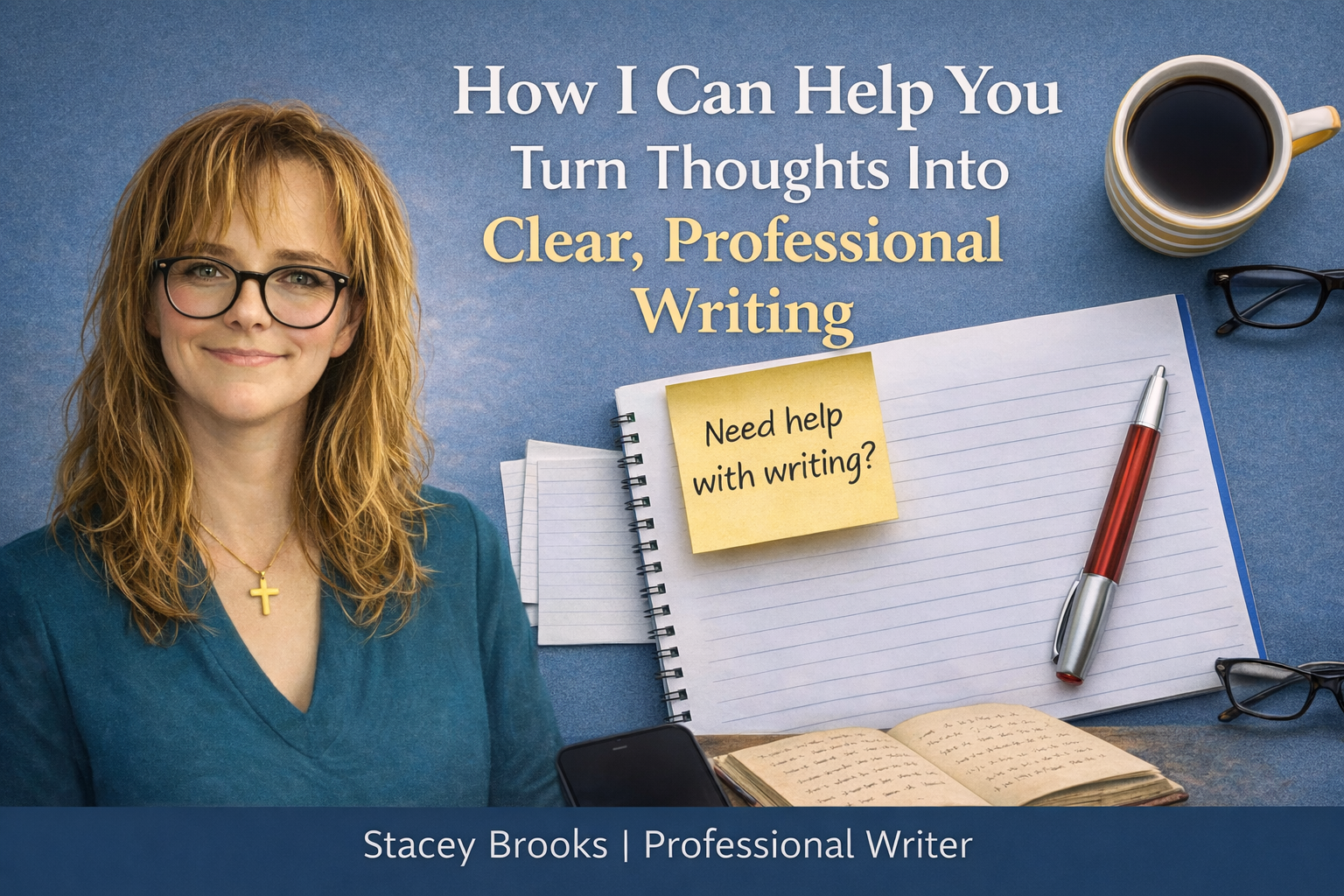
How I Can Help You Turn Thoughts Into Clear, Professional Writing

Most people don’t struggle because they lack ideas.
They struggle because they’re holding too much at once.

Unfinished thoughts. Emotional weight. Uncertainty about tone. Fear of saying the wrong thing. Important situations where the words actually matter.

That’s where my work begins.

I help individuals, families, and small businesses move from “I don’t know how to say this” to clear, respectful, professional writing that serves its purpose.

Here are the many ways I assist people throughout the writing process.

Professional and Personal Letters

I help write and refine letters that need clarity, tact, and credibility, including:

  • Legal and formal correspondence

  • Employment and workplace letters

  • Letters to schools, agencies, landlords, or organizations

  • Personal letters that still require a professional tone

  • Follow-up, appeal, clarification, or explanation letters

Often, people know what they need to say. They just need help saying it in a way that will be heard.

Business and Professional Documents

I support clients with writing that represents them or their business, such as:

  • Business plans and supporting narratives

  • Mission statements and purpose statements

  • Professional bios and introductions

  • Client communications and proposals

  • Internal documents that need structure and polish

The goal is not fancy language. The goal is clarity, confidence, and credibility.

Editing, Revising, and Strengthening Existing Writing

Many clients come to me with drafts already written. My role may include:

  • Organizing scattered thoughts into a logical flow

  • Improving tone without changing the writer’s voice

  • Clarifying meaning while preserving intent

  • Removing unnecessary wording while strengthening impact

  • Making writing sound calm, professional, and intentional

Sometimes the work is not starting from scratch, but refining what already exists.

Helping When Emotions Are Involved

Some writing situations carry emotional weight. Conflict, stress, fear, or urgency can make it difficult to choose the right words.

I help clients:

  • Separate emotion from message

  • Maintain dignity and respect in difficult situations

  • Communicate clearly without escalating conflict

  • Write in a way that protects their position and their peace

This is especially important when writing affects real outcomes.

Structuring Ideas When You Feel Stuck

For clients who feel overwhelmed or unsure where to begin, I help with:

  • Outlining thoughts before writing begins

  • Identifying the true purpose of the document

  • Deciding what needs to be included and what does not

  • Turning verbal explanations into written form

Clarity often comes before the words themselves.

Guidance Through the Writing Process

I don’t just hand over words. I help people understand the process, including:

  • What tone fits the situation

  • How structure affects perception

  • Why certain wording works better than others

  • How to revise with intention instead of second-guessing

My role is part writer, part translator, part guide.

x  Powerful Protection for WordPress, from Shield Security
This Site Is Protected By
Shield Security