Sometimes people are not struggling because they have nothing to say. They are struggling because they are overwhelmed.
One thing I have noticed over and over while helping people with resumes, appeals, business documents, grant applications, and professional letters is this:
Most people are not bad communicators.
They are stressed communicators.
There is a difference.
When people are under pressure, their thoughts become crowded. They over-explain. They jump around. They leave out important details because they are emotionally focused on the situation instead of the structure.
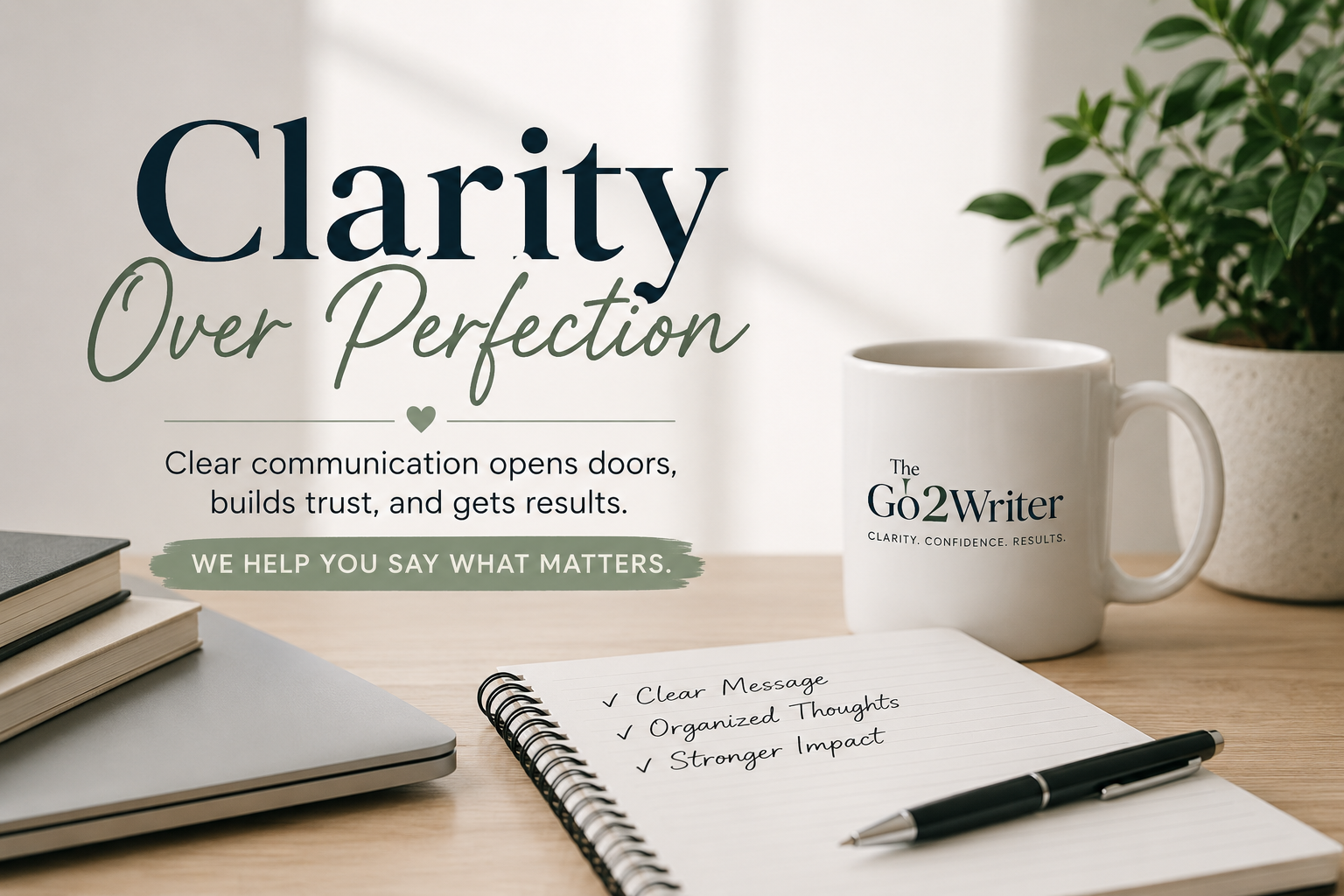
That is why clarity matters so much.
Not perfection.
Not fancy words.
Not sounding like a lawyer.
Not trying to impress people.
Just clarity.
Clear writing creates confidence
When a document is organized clearly, people feel more confident reading it.
That matters more than most people realize.
Whether someone is reviewing:
- a resume
- a grant application
- a hardship letter
- an unemployment appeal
- a business plan
- a customer complaint
- a formal explanation
- or even an email
The reader is usually looking for the same thing:
“What exactly is this person trying to say?”
If they have to dig for the answer, the message loses strength.
That does not mean your writing has to sound robotic.
It means your writing needs direction.
The biggest mistake people make
One of the biggest mistakes people make is trying to sound “important” instead of trying to sound understandable.
People start adding complicated phrases they would never say in real life.
They use giant paragraphs.
They overload the document with emotion.
Or they try so hard to sound professional that the document no longer sounds human.
Professional writing is not about sounding smarter than everyone else.
It is about helping the reader follow the message without confusion.
That is where structure becomes powerful.
Organization changes everything
Sometimes the difference between a weak document and a strong document is not the information.
It is the organization.
The exact same facts can feel:
- overwhelming
- emotional
- disorganized
- unclear
or
- calm
- direct
- credible
- solution-focused
depending on how they are presented.
That is one reason I enjoy this type of work so much.
I genuinely enjoy helping people take situations that feel mentally scattered and turning them into something organized, readable, and actionable.
For many people, that alone reduces stress.
You do not have to be a professional writer to communicate effectively
This is something I wish more people understood.
You do not need perfect grammar to communicate well.
You do not need a college degree to write a strong letter.
You do not need to sound corporate to sound professional.
You simply need:
- clarity
- honesty
- structure
- organization
- and the ability to stay focused on the purpose of the document
That is where many people get stuck.
Not because they are incapable.
But because they are emotionally too close to the situation.
Sometimes people just need help organizing the noise
That may honestly be one of the best ways to describe what I do.
I help organize the noise.
Sometimes people already know exactly what happened.
They just do not know how to present it clearly.
And when life feels overwhelming, that can become incredibly difficult.
Especially when the situation involves:
- finances
- employment
- government paperwork
- medical situations
- business goals
- family stress
- deadlines
- or major life transitions
Clear communication creates movement.
Confusion creates delays.
Final thoughts
If you are staring at a blank screen trying to figure out how to explain something important, you are not alone.
A lot of people struggle with translating real-life situations into clear, professional communication.
That does not make you unintelligent.
It makes you human.
Sometimes the hardest part is not knowing what happened.
It is knowing how to organize it in a way other people can actually follow.
And honestly, that is why services like this exist.
Not because people are incapable.
But because sometimes clarity is easier to create when someone helps you step outside the emotional weight of the situation and focus on the message itself.
If that sounds familiar, that is exactly the kind of work I love helping people with.
Stacey Brooks | TheGo2Writer