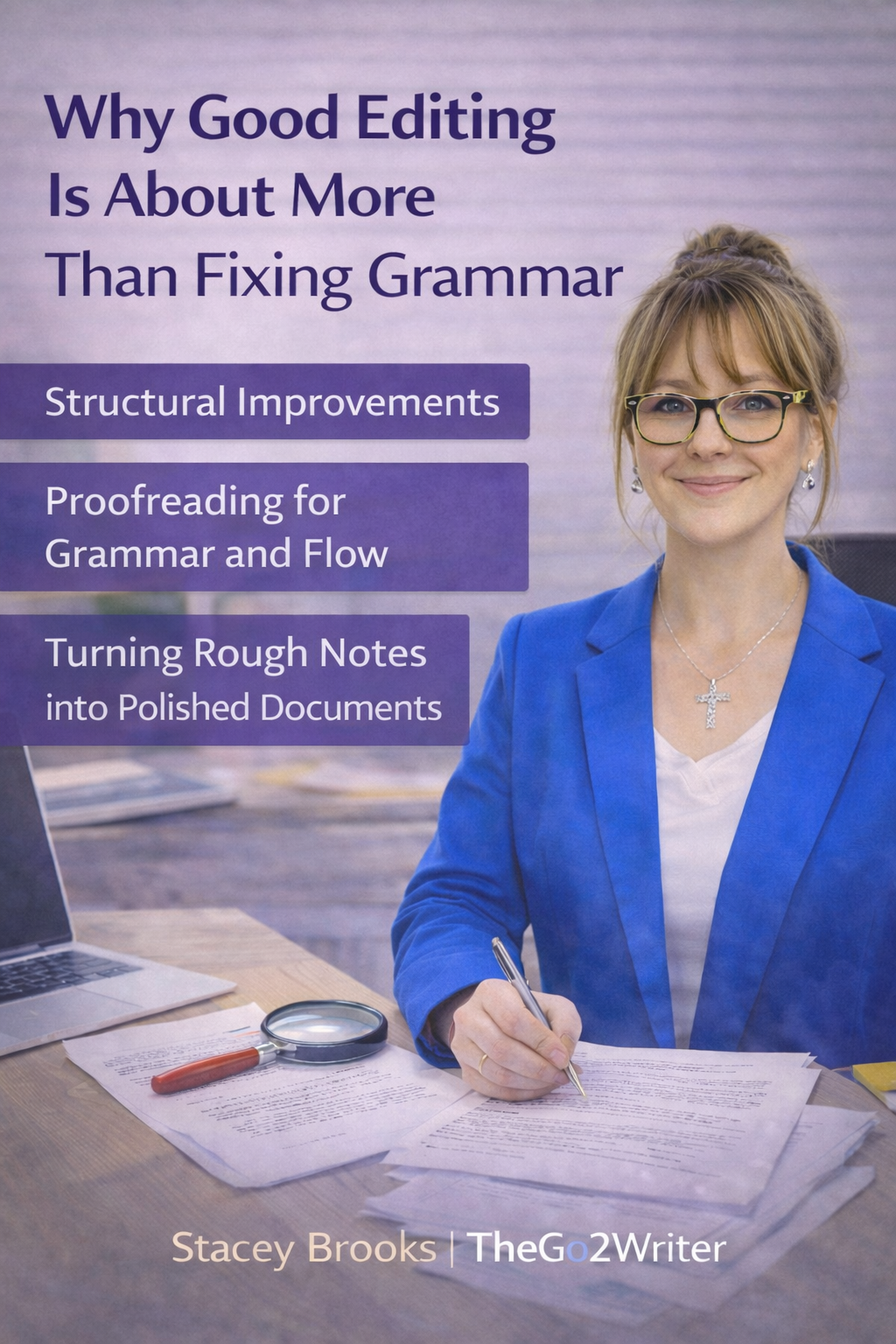
Why Good Editing Is About More Than Fixing Grammar

When most people think about editing, they think about correcting grammar mistakes.

Misspelled words.
Missing commas.
Run-on sentences.
Typos.

Those things matter.

But strong editing is about much more than simply cleaning up mistakes.

In many cases, the real problem is not grammar.

The real problem is structure.

A document can be completely free of spelling errors and still be difficult to read, confusing, repetitive, too emotional, too vague, or missing the information that actually matters.

That is why editing is not just about making writing “look better.”

It is about making writing work better.

A well-edited document should answer a few important questions very quickly:

What is this document about?
What does the reader need to know?
What action is being requested?
What details matter most?
What can be removed to make the message stronger?

Those questions matter whether you are writing a resume, a complaint letter, a business proposal, a hardship explanation, a grant application, or even a simple email.

Most people are too close to their own writing to see where the problems are.

That is normal.

When you have lived through a situation, worked on a business idea for months, or spent hours trying to explain something important, it becomes harder to notice what is missing or what needs to be reorganized.

That is where editing becomes valuable.

Structural Improvements Matter More Than Most People Realize

One of the biggest reasons documents feel “off” is because the information is not in the right order.

People often write in the order they remembered something instead of the order the reader actually needs to understand it.

For example:

  • They may explain details before giving basic background
  • They may include emotional information before stating the main point
  • They may bury the most important request in the middle of the document
  • They may repeat the same idea multiple times without realizing it
  • They may leave out dates, timelines, or key facts that would help the reader understand the situation

Editing helps reorganize the document so it flows logically.

Instead of feeling scattered, the writing begins to move in a clear direction.

A strong structure often looks something like this:

  1. Brief introduction or purpose
  2. Key background information
  3. Main facts or timeline
  4. Supporting details or examples
  5. Clear request, next step, or conclusion

That structure works in many different types of writing because it helps the reader stay oriented.

The easier it is to follow the information, the more likely the reader is to stay engaged.

Proofreading Is Important, But It Is Not Enough

Proofreading focuses on the technical side of writing.

Grammar.
Punctuation.
Spelling.
Formatting.
Word choice.

These details matter because they affect credibility.

If a document has obvious errors, it can make the writer appear rushed, careless, or unprepared, even if the actual information is strong.

For example:

  • A resume with grammar mistakes can make an employer question attention to detail
  • A business proposal with inconsistent formatting can make the company appear less professional
  • A dispute letter with confusing wording can weaken the argument
  • A grant application with repeated mistakes can hurt credibility with reviewers

Proofreading helps remove distractions so the reader stays focused on the message instead of the mistakes.

But proofreading alone does not fix deeper issues with organization, tone, or clarity.

That is why proofreading is only one part of strong editing.

Tone Can Change the Entire Outcome

Tone is one of the most overlooked parts of writing.

Two people can say the exact same thing, but one version may sound professional while the other sounds angry, defensive, emotional, or unclear.

This matters a lot in high-stakes writing.

A strong tone is usually:

  • Respectful
  • Direct
  • Professional
  • Calm
  • Clear
  • Confident without sounding aggressive

For example, many people write letters while they are upset.

That is understandable.

But emotional writing often causes people to:

  • Add unnecessary details
  • Repeat themselves
  • Use overly strong language
  • Focus on feelings instead of facts
  • Sound accusatory instead of persuasive

Editing helps soften tone without weakening the message.

The goal is not to remove emotion completely.

The goal is to make sure the emotion does not overpower the purpose of the document.

Turning Rough Notes Into Polished Documents

Many people do not start with a finished draft.

They start with:

  • Bullet points
  • Screenshots
  • Voice notes
  • Text messages
  • Random notes in their phone
  • Half-finished paragraphs
  • Long explanations that jump from one idea to another

That is more common than people realize.

In fact, some of the strongest documents begin as rough notes.

The key is learning how to pull the important information out and organize it into something useful.

When turning rough notes into a polished document, it helps to ask:

  • What is the main issue or purpose?
  • What details matter most?
  • What order should the information go in?
  • What can be shortened or removed?
  • What does the reader need to understand quickly?

Once those answers become clear, the document becomes much easier to write.

This is one of the biggest reasons people seek editing help.

They are not always looking for someone to “write for them.”

Often, they simply need help organizing what is already there.

Good Editing Makes the Reader’s Job Easier

At the end of the day, editing is really about making the reader’s job easier.

People reviewing documents are often busy.

Employers.
Grant reviewers.
Government agencies.
Potential clients.
Business partners.
Credit bureaus.
Appeal officers.

Most of them are reading quickly.

They want to understand the key information without having to dig through unnecessary details or confusing explanations.

Good editing helps make that possible.

Because when a document is clear, organized, and easy to follow, the message becomes much stronger.

And strong messages are much more likely to get results.

Stacey Brooks | TheGo2Writer
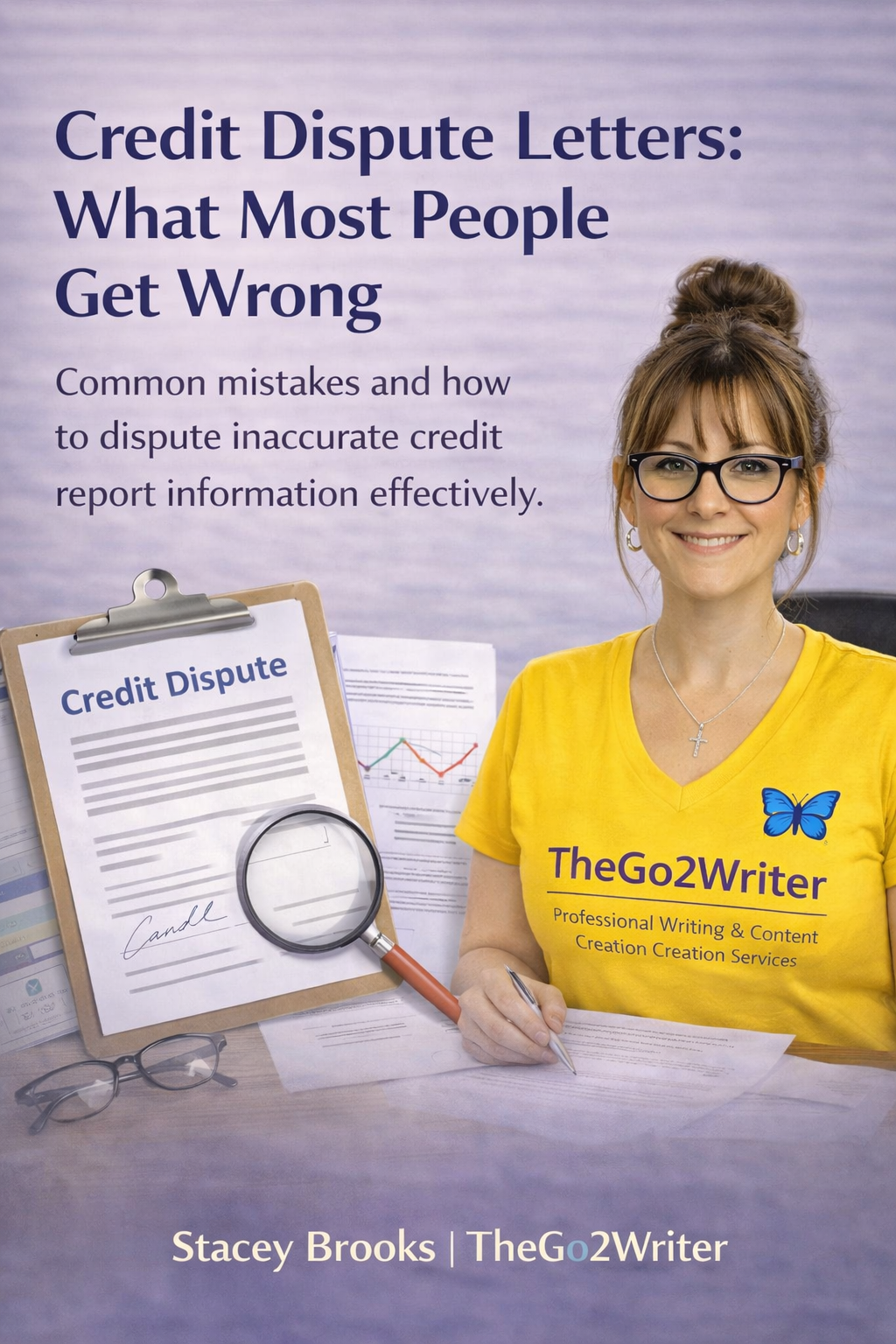
Credit Dispute Letters: What Most People Get Wrong

When people decide to fix their credit, one of the first things they hear is:

“Just send a dispute letter.”

It sounds simple.

But this is where many people run into problems.

Because a dispute letter is not just a letter. It is a form of communication that needs to be clear, specific, and purposeful.

And most of the time, what gets sent is either too vague or too aggressive.

Some letters say too little.

“This account is not mine. Please remove it.”

That kind of statement may feel direct, but it often does not give enough information for the credit bureaus to properly investigate the issue.

On the other hand, some letters say too much.

They include long emotional explanations, frustration, or unrelated details that make it harder for the reader to identify the actual issue being disputed.

Neither approach works well.

A strong dispute letter is structured.

It clearly identifies the account in question.
It explains what is inaccurate.
It states what correction is being requested.
And it keeps the tone professional and focused.

The goal is not to argue.

The goal is to communicate clearly so the issue can be reviewed properly.

Another common mistake is sending the same generic letter over and over again.

Credit reporting is a process. Each dispute should be intentional and based on the specific issue being addressed.

Sometimes the problem is inaccurate information.
Sometimes it is incomplete reporting.
Sometimes it is a timing or documentation issue.

Each situation requires a slightly different approach.

This is why structure matters so much.

When a dispute is clear and organized, it becomes easier for the person reviewing it to understand exactly what needs to be verified or corrected.

And clarity increases the chances of a meaningful response.

If you are working on your credit and feeling unsure about how to write a dispute letter, you are not alone.

Many people know something is wrong on their report, but struggle to explain it in a way that gets results.

That is exactly where writing support can make a difference.

Because the right words are not just about what you say.

They are about how clearly you say it.

Stacey Brooks | TheGo2Writer
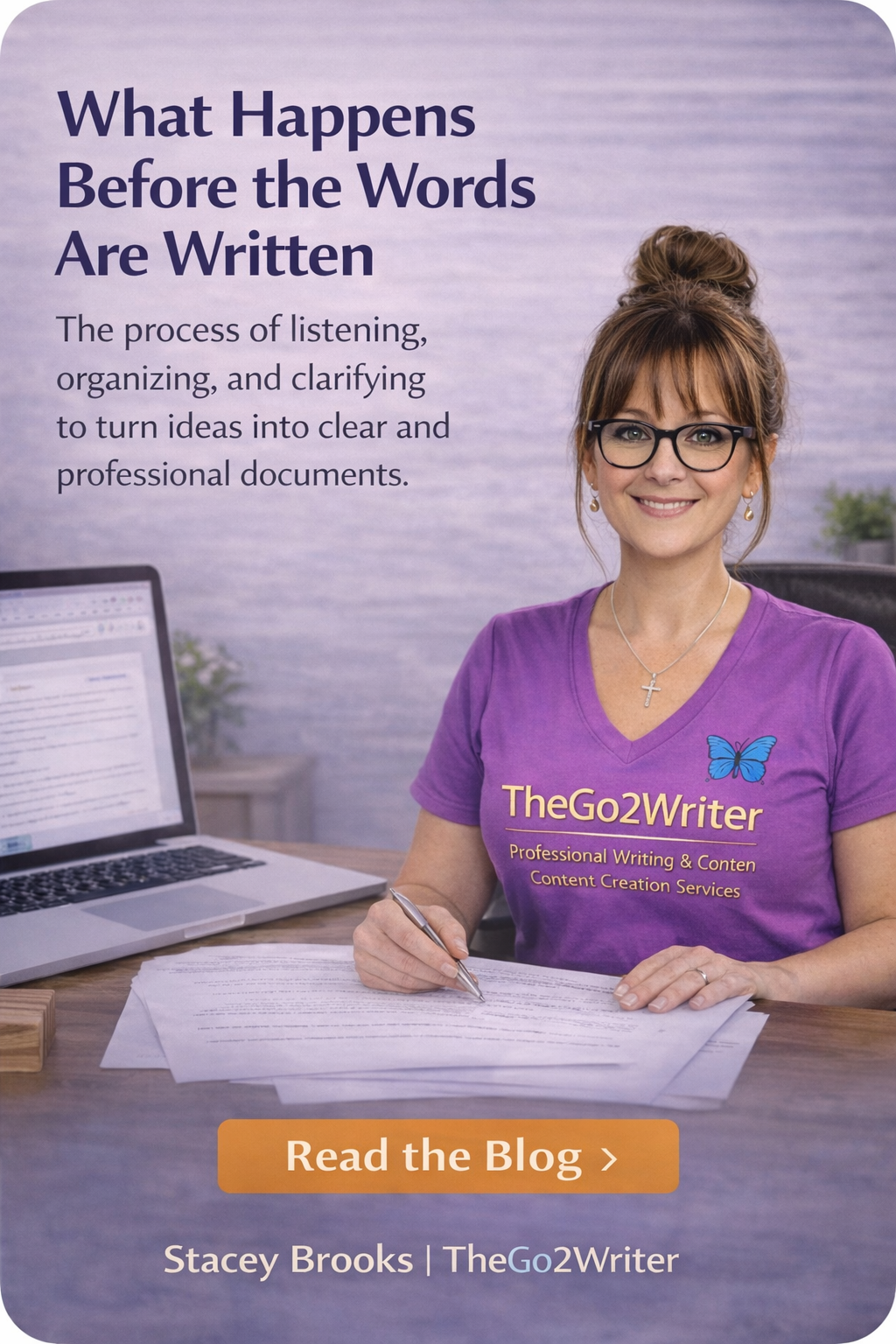
What Happens Before the Words Are Written

When people think about writing services, they usually imagine the final document.

A polished letter.
A professional resume.
A clear business proposal.
A well-structured appeal.

But the most important part of the work often happens before a single sentence is written.

It starts with listening.

Most people who come to me for help are not struggling because they do not know their situation. In fact, they usually know it very well. The difficulty comes from trying to organize everything in their mind into something that reads clearly and professionally on paper.

They may have pages of notes, screenshots, emails, or timelines. Sometimes the details are scattered. Sometimes the story is emotionally heavy. Other times the information is simply too complex to know where to begin.

Before writing anything, the first step is understanding the full picture.

What actually happened?
What information matters most?
Who will be reading the document?
What outcome are we trying to achieve?

Once those questions are answered, the writing process becomes much clearer.

Good writing is not just about sounding professional. It is about structure. It is about presenting information in a way that allows the reader to follow the story, understand the facts, and see the situation clearly.

In many cases, the goal is not to add more words.

The goal is to remove confusion.

That may mean organizing events into a timeline, clarifying a key point that could be misunderstood, or adjusting tone so the message is firm but still respectful.

When the structure is right, the words tend to fall into place naturally.

This is why writing support is often less about “writing for someone” and more about helping someone translate their experience into clear communication.

Every document has a purpose.

Sometimes it is to explain.
Sometimes it is to request.
Sometimes it is to defend a position.
And sometimes it is simply to make sure a voice is heard clearly.

Behind every finished document is a process of listening, organizing, and shaping ideas into something that communicates effectively.

That is the part of the work most people never see.

But it is often the part that makes the biggest difference.

Stacey Brooks | TheGo2Writer

When the Paperwork Feels Bigger Than the Problem

Most people do not struggle because they lack ideas.

They struggle because everything is happening at once.

A letter needs to be written.
An application needs to be completed.
A response is required by a certain date.
A business document needs to be created.

And suddenly the paperwork begins to feel bigger than the actual situation.

I see this often when people reach out for writing help. The issue itself may not be complicated. What makes it overwhelming is the pressure of putting the right words together in a clear and professional way.

Many people sit staring at a blank screen for hours thinking:

“What if I say the wrong thing?”
“What if this sounds unprofessional?”
“What if I leave something important out?”

So they delay. Not because they are careless. But because they care deeply about getting it right.

The truth is that writing is not just about words. It is about structure. It is about clarity. It is about helping someone understand your situation without confusion or unnecessary emotion getting in the way.

Whether it is a business document, a formal letter, a professional response, or an application that matters to your future, the goal is always the same: communicate clearly and respectfully so your message can actually be heard.

Sometimes the most helpful step is simply having someone organize the thoughts that are already there.

That is where writing support can make all the difference.

If you are facing a situation where the paperwork feels overwhelming or you are unsure how to say what needs to be said, you do not have to figure it out alone.

That is exactly the kind of work I help people with every day.

Stacey Brooks | TheGo2Writer

When You Don’t Know What to Say

There is a particular kind of stress that comes from needing to write something important and not knowing where to begin.

It might be a letter to an employer.
An appeal.
A business plan.
A response to an agency.
A difficult message that cannot be avoided.

Most people assume the problem is that they “are not good writers.”

That is rarely true.

The real problem is overload.

Too many thoughts at once.
Too much emotion attached to the situation.
Too much pressure riding on the outcome.

When the mind holds everything at once, clarity disappears.

Writing is not about fancy words.
It is about structure.

What is the purpose?
What must be communicated?
What tone is appropriate?
What outcome are we seeking?

Once those questions are answered, the fog begins to lift.

Clarity creates calm.
Calm creates confidence.
Confidence creates credibility.

From a faith perspective, there is also something grounding about remembering that truth does not require panic. If something needs to be said, it can be said with dignity and order.

Even difficult messages can be structured with steadiness.

When clients come to me overwhelmed, my role is not to take over their voice. It is to help organize it. To separate emotion from message. To make sure what matters most is not buried under stress.

If you are staring at a blank screen tonight, you are not incapable. You are likely just carrying too much at once.

And structure solves that.

Stacey Brooks
TheGo2Writer

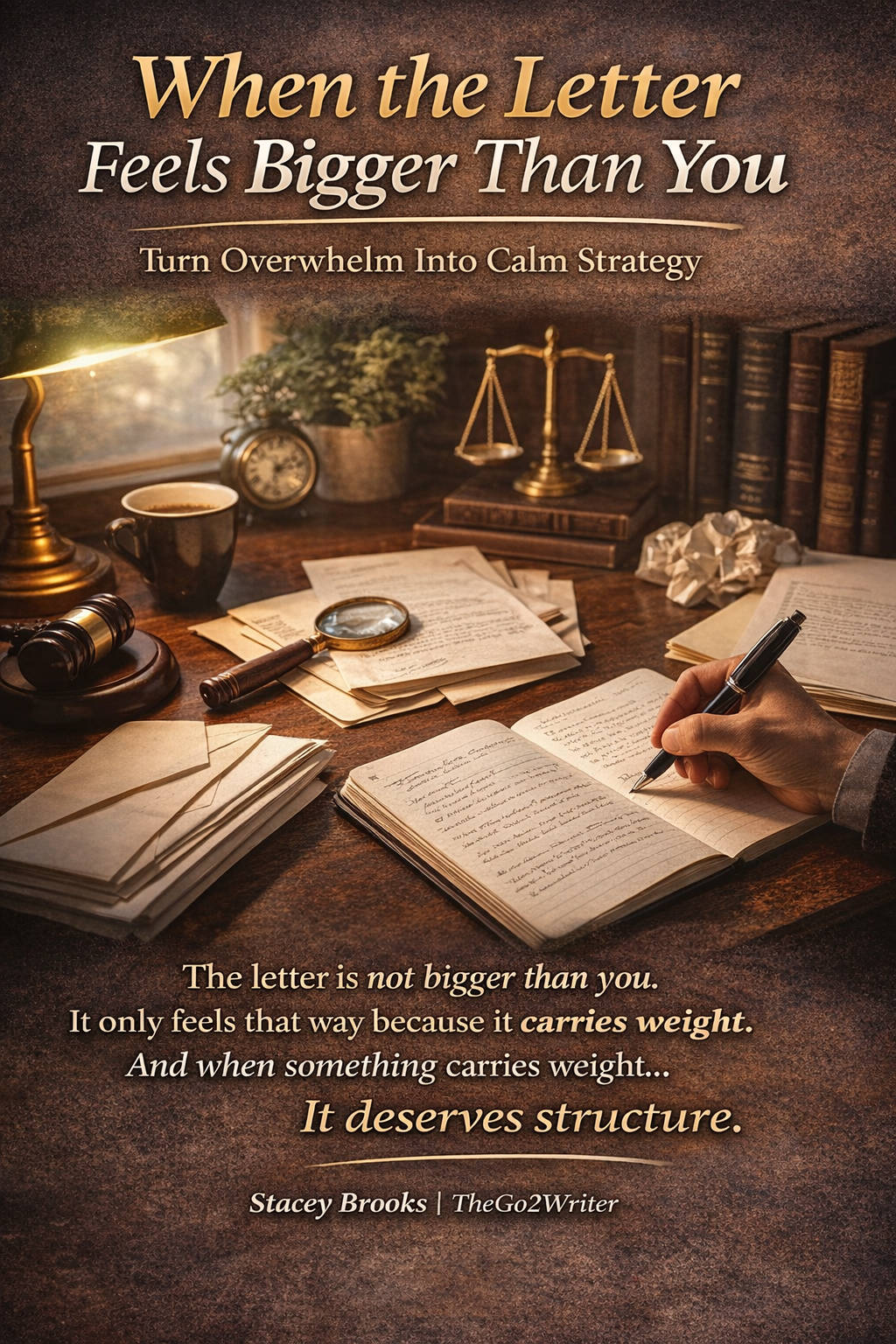
When the Letter Feels Bigger Than You

There is a specific kind of stress that happens when you know you need to write something important.

A dispute letter.
An appeal.
A formal complaint.
A response to a creditor.
A letter to a school, an employer, or an agency.

The moment you sit down to write it, everything feels heavy.

Your thoughts move too fast.
Your emotions sit too close to the surface.
Your words either come out too strong or not strong enough.

If you have ever felt this way, let me gently tell you something important:

The letter is not bigger than you.

It only feels that way because it carries weight. And when something carries weight, it deserves structure.

Why Important Letters Feel Overwhelming

Most people think they struggle with writing because they are not “good writers.”

That is rarely true.

The real issue is this: you are trying to process emotion and construct strategy at the same time.

That is exhausting.

When you are dealing with credit disputes, appeals, legal notices, financial hardship explanations, or professional complaints, you are not just writing. You are protecting your future. That pressure changes everything.

Calm Structure Changes Outcomes

Professional writing is not about sounding impressive. It is about being clear, organized, and intentional.

Here is what strong structured writing does:

It separates facts from emotion.
It organizes events into a timeline.
It removes unnecessary language.
It protects your credibility.
It strengthens your position.

Most importantly, it restores your confidence.

When a letter is structured properly, it stops feeling chaotic. It becomes controlled. Measured. Strategic.

And that shift alone can change the tone of the response you receive.

Clarity Creates Confidence

In many cases, the issue is not that people do not know what happened. They know exactly what happened.

They just have too much information in their head at once.

When everything is tangled together, it feels overwhelming. When it is separated into sections and presented calmly, it becomes manageable.

That is what clarity does. It reduces fear.

You Do Not Have To Face Important Paperwork Alone

There is nothing weak about asking for help with something that affects your finances, your reputation, or your future.

Strong people seek structure.

Wise people seek strategy.

And steady progress begins with calm, intentional action.

If you are sitting in front of a letter that feels too heavy to write, pause. Take a breath. Remember that structure changes everything.

You are not behind.
You are not incapable.
You are simply in a moment that requires clarity.

And clarity can be built.

Stacey Brooks
Professional Writing Services
TheGo2Writer.com

x  Powerful Protection for WordPress, from Shield Security
This Site Is Protected By
Shield Security