When people decide to fix their credit, one of the first things they hear is:
“Just send a dispute letter.”
It sounds simple.
But this is where many people run into problems.
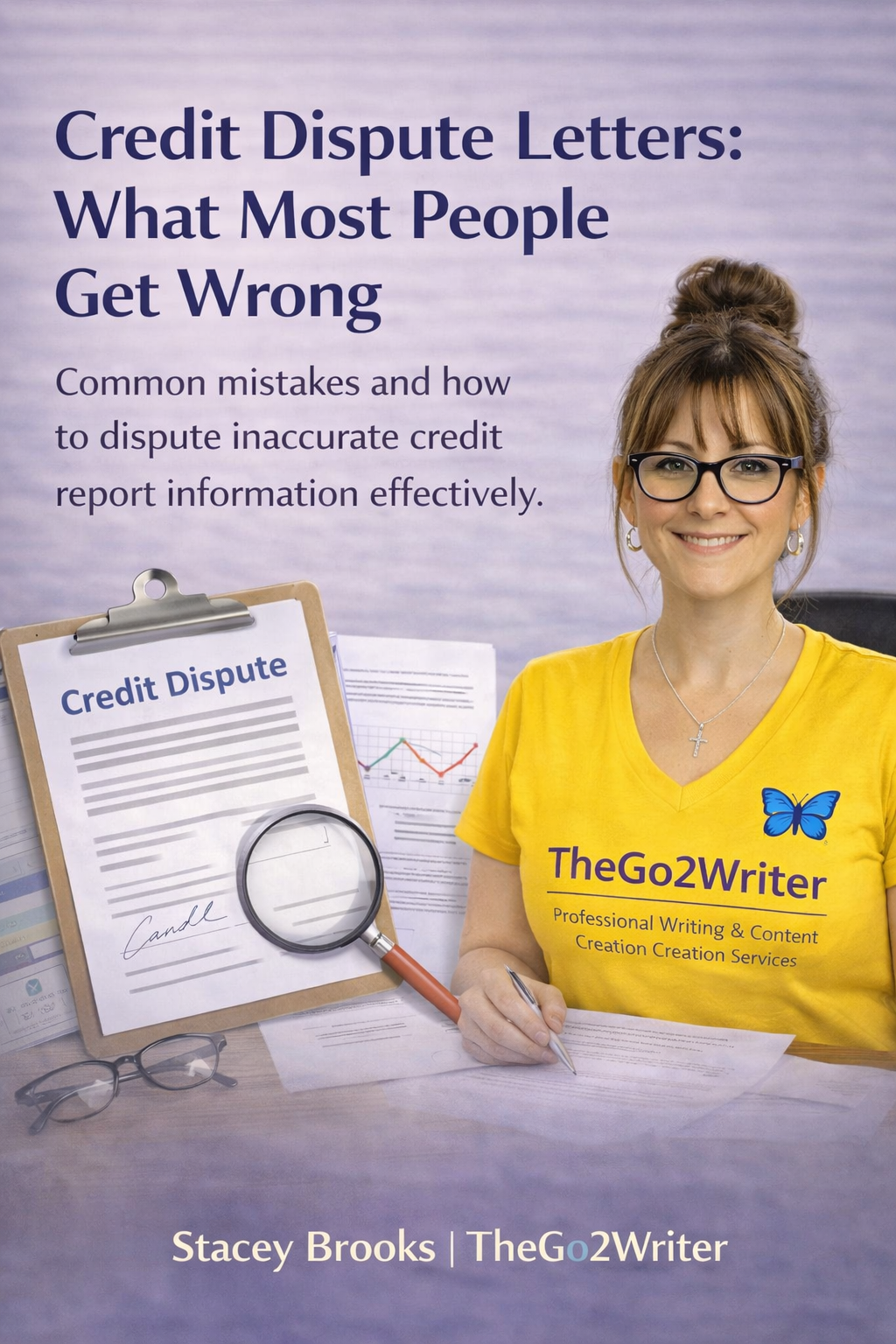
Because a dispute letter is not just a letter. It is a form of communication that needs to be clear, specific, and purposeful.
And most of the time, what gets sent is either too vague or too aggressive.
Some letters say too little.
“This account is not mine. Please remove it.”
That kind of statement may feel direct, but it often does not give enough information for the credit bureaus to properly investigate the issue.
On the other hand, some letters say too much.
They include long emotional explanations, frustration, or unrelated details that make it harder for the reader to identify the actual issue being disputed.
Neither approach works well.
A strong dispute letter is structured.
It clearly identifies the account in question.
It explains what is inaccurate.
It states what correction is being requested.
And it keeps the tone professional and focused.
The goal is not to argue.
The goal is to communicate clearly so the issue can be reviewed properly.
Another common mistake is sending the same generic letter over and over again.
Credit reporting is a process. Each dispute should be intentional and based on the specific issue being addressed.
Sometimes the problem is inaccurate information.
Sometimes it is incomplete reporting.
Sometimes it is a timing or documentation issue.
Each situation requires a slightly different approach.
This is why structure matters so much.
When a dispute is clear and organized, it becomes easier for the person reviewing it to understand exactly what needs to be verified or corrected.
And clarity increases the chances of a meaningful response.
If you are working on your credit and feeling unsure about how to write a dispute letter, you are not alone.
Many people know something is wrong on their report, but struggle to explain it in a way that gets results.
That is exactly where writing support can make a difference.
Because the right words are not just about what you say.
They are about how clearly you say it.
Stacey Brooks | TheGo2Writer
